Every Charleston-area child can now use the Hope Scholarship
This year West Virginia opened Hope to every K-12 student. Here is what it pays, how a family applying this fall gets funded, and which Kanawha Valley schools and programs it reaches.
Quick answer
Charleston Edu Funding explains how families in Kanawha, Putnam, Boone, Lincoln and Clay counties can use West Virginia's Hope Scholarship, worth $5,435.62 for a full 2026-27 year, at private, Catholic, Christian, microschool, online and home programs. Since July 1, 2026 every K-12 student in the state is eligible, and new applicants this fall receive the 50% tier of $2,717.81.
Hope, K-12, 2026-27. That is the full-year figure, paid in quarterly deposits on Aug 15, Oct 15, Jan 15 and Apr 15. A family applying between Sep 16 and Nov 30, 2026 is funded at 50%, or $2,717.81.
private schools and microschools in our five-county directory, matched to federal records and state lists.
appear on the Hope list as checked in October 2026; always confirm with the school.
students applied for full funding statewide for 2026-27, nearly double the year before.
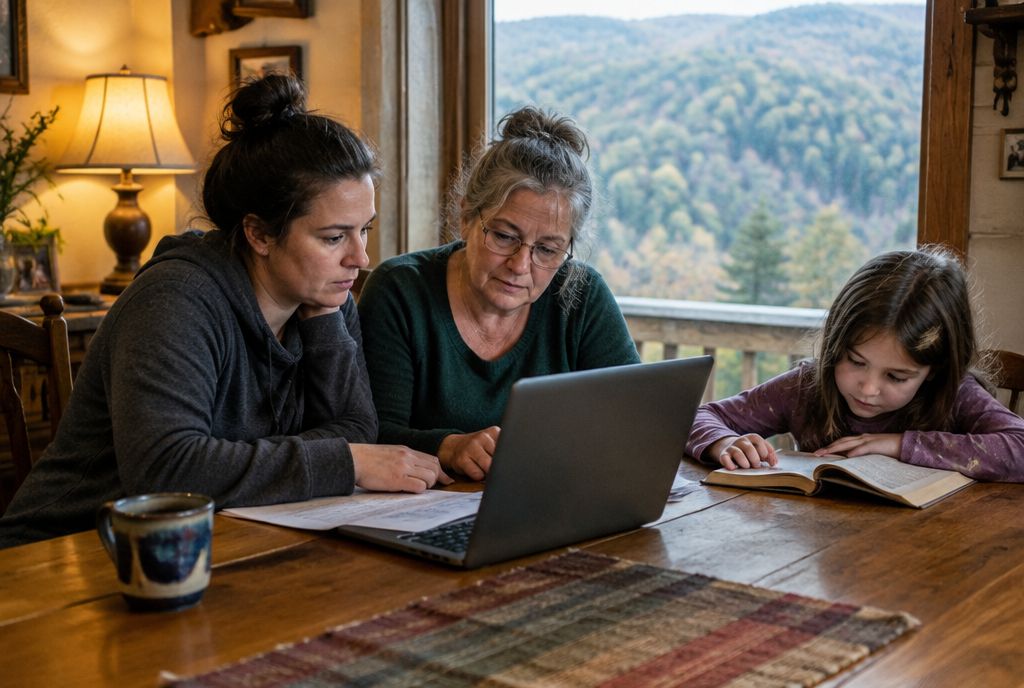
What Hope does to a typical Kanawha Valley tuition bill
Take a hypothetical Christian school charging $7,000 a year and a child funded for the full year.
Illustrative only. A family applying between Sep 16 and Nov 30, 2026 receives the 50% tier, $2,717.81, for this year.
Hope, plus the help around it
West Virginia has one main program, so the other sources here fill specific gaps: Catholic tuition, the preschool years and college courses in high school.
Hope Scholarship
West Virginia's Hope Scholarship puts $5,435.62 a year into an online account for every K-12 student in Kanawha, Putnam, Boone, Lincoln and Clay counties, starting with 2026-27.
Who qualifies →Published list · checked Oct 2026Hope Participating Schools in the Kanawha Valley
Which private schools and microschools in Kanawha, Putnam, Boone, Lincoln and Clay counties appear on the Hope Scholarship Board's published list, and what being on it means.
Who qualifies →Catholic schools · need-basedDiocese of Wheeling-Charleston Tuition Assistance
The diocesan Tuition Assistance Program can cover up to half of a child's tuition at Catholic schools such as those in Charleston and St. Albans.
Who qualifies →Ages 3-4 · Hope does not cover Pre-KFree Pre-K and Child Care Assistance
Hope starts at kindergarten, so families with younger children in Kanawha, Putnam, Boone, Lincoln and Clay counties rely on free Universal Pre-K and state child care assistance.
Who qualifies →High school · Hope-eligibleDual Credit and College Courses
Hope pays tuition, fees and materials for dual-credit and college-level courses, which Kanawha Valley high schoolers can take through local colleges.
Who qualifies →All 5 funding sources What Hope pays for Hope Scholarship calculator
Three steps for a Kanawha Valley family
Get the WVEIS number
Ask your county board of education for the child's state student ID, and find a state or county birth certificate.
Application guide →Apply by Nov 30
Applications from Sep 16 to Nov 30, 2026 are funded at 50%, or $2,717.81, for the rest of the year.
How Hope works →File the Notice of Intent
Once Eligible, file the Hope notice with the county superintendent before the Jan 2 cutoff for the Jan 15 deposit.
Run the calculator →Private schools and microschools in the five counties
A small metro with a clear mix: three Catholic schools, a cluster of Christian schools from Elkview to Hurricane, two Montessori programs and a growing set of Hope-listed microschools.
Christian Schools
Church-run and independent Christian schools from Elkview and Cross Lanes to Hurricane, Scott Depot, Dunbar and Madison.
10 schools →Independent Schools
Two Montessori programs in Charleston, a learning center in South Charleston and several Hope-listed microschools.
7 schools →Private High Schools
Private schools in the five counties that run through grade 12, from Charleston Catholic downtown to Christian schools in Putnam and Boone.
8 schools →Microschools & Hybrid Schools
Small tuition-charging programs listed as microschools on the Hope list, in South Charleston, St. Albans and Clendenin.
5 schools →By community: Charleston · South Charleston & Dunbar · St. Albans, Nitro & Cross Lanes
Partner with Charleston Edu Funding
Run a school, microschool or church ministry in the Kanawha Valley? Make sure families can find your Hope status and tuition.
Hope Scholarship news for the valley
Microschools and Online School with Hope in the Kanawha Valley: SB 268, IIP and What to Check
West Virginia's SB 268 created microschools in 2022, and Hope can pay their tuition and nonpublic online programs. How the IIP pathway works for Charleston-area families.
Read →Oct 8, 2026Applying for Hope This Fall: How the 50% Funding Tier Works for Charleston Families
A new Hope Scholarship application filed between Sep 16 and Nov 30, 2026 is funded at 50%, or $2,717.81. Here is how the deposits, cutoffs and spring option compare.
Read →Oct 5, 2026Kanawha County's School Closures and the Hope Scholarship: What Families Should Know in 2026-27
Kanawha County closed or merged six schools in 2024 and lost more than 1,200 students to Hope. With Hope now universal, here is what families in the affected areas can weigh.
Read →Common questions
How much is the Hope Scholarship for a Charleston family applying in October 2026?
A Charleston family applying for the Hope Scholarship between September 16 and November 30, 2026 is funded at 50% for the 2026-27 school year, which is $2,717.81 per student. A full year of Hope funding is $5,435.62. The Hope Scholarship Board pays the money in the remaining quarterly deposits, so the family must also file its Notice of Intent with the county before each cutoff.
Who runs the Hope Scholarship in West Virginia?
The Hope Scholarship is governed by the Hope Scholarship Board, chaired by State Treasurer Larry Pack, with day-to-day administration by the Treasurer's office. Student First Technologies operates the online Hope Scholarship portal and its TheoPay marketplace. Families can reach the Hope Engagement Center at 681-999-4673 or help@hopescholarshipwv.com with application questions.
Does West Virginia have a tax-credit scholarship besides the Hope Scholarship?
No. West Virginia has no state tax-credit scholarship program, so the Hope Scholarship is the main state source for Charleston-area families. West Virginia has said it intends to join the new federal scholarship tax credit that begins in 2027, but the 2026 bills to set it up did not finish, so whether West Virginia participates is not settled.
How many private schools are in the Charleston, West Virginia area?
Our directory lists 21 private schools and microschools in Kanawha, Putnam, Boone, Lincoln and Clay counties, and 20 of them appear on the Hope Scholarship participating-school list we checked in October 2026. The state's own nonpublic school list counts 14 registered schools in those counties, with most in Kanawha County and none in Lincoln County.
When do 2027-28 Hope Scholarship applications open for Kanawha Valley families?
The Hope Scholarship portal begins accepting new applications for the 2027-28 school year on March 1, 2027, according to the Hope Scholarship Parent Handbook. For 2026-27, Hope Scholarship applications filed by June 15 were funded at 100%. The Hope Scholarship Board had not published the 2027-28 award amount or exact window dates as of October 2026.
See what Hope means for your child
Answer a few questions about grade, school and county. A School Funding Advisor calls back with your Hope timing and any aid that fits. No cost.